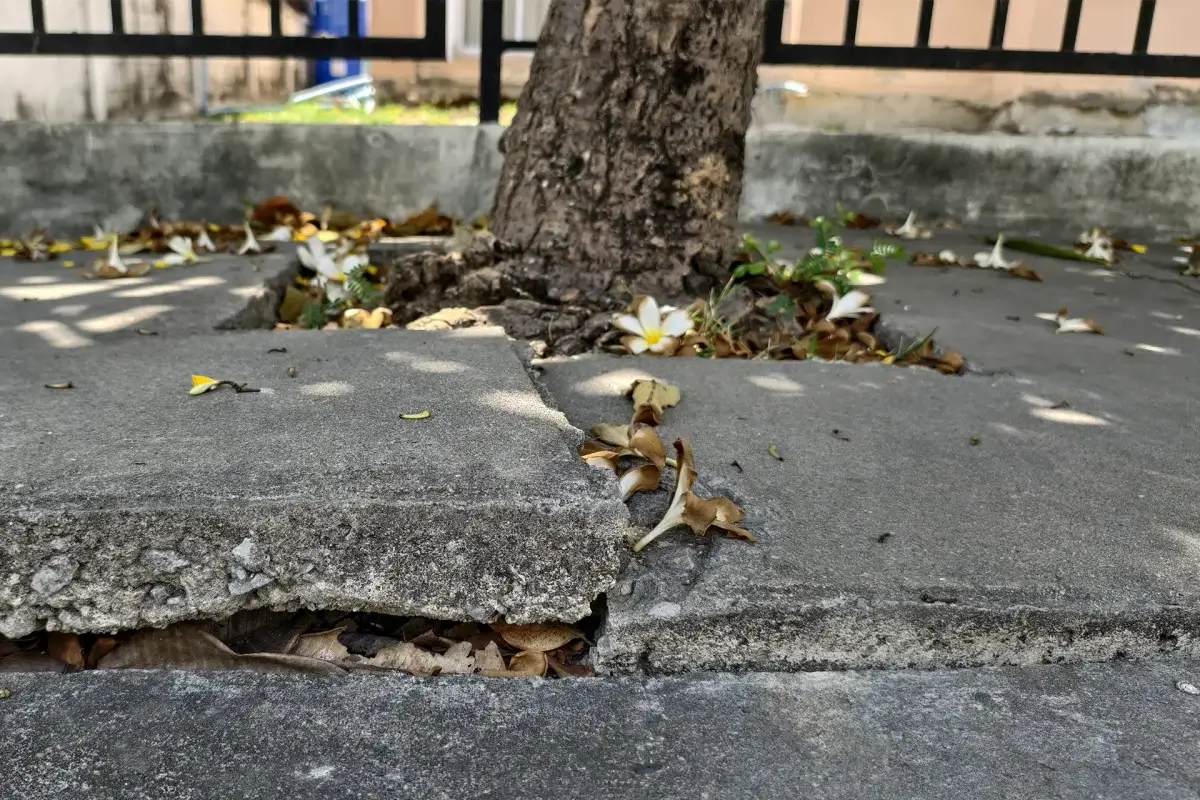
When a neighbor’s tree roots extend onto your property and cause damage, you may have legal options to recover compensation. New Jersey law addresses tree root disputes between property owners, though these cases can be complex.
Tree Root Damage and Property Rights in NJ
The Self-Help Doctrine
New Jersey traditionally follows the “self-help” approach to tree root problems:
- Property owners may cut roots that extend onto their property
- The right to trim extends to the property line only
- You cannot damage the tree or kill it through root cutting
- You generally bear the cost of removal yourself
When Self-Help Isn’t Enough
The self-help doctrine doesn’t help when:
- Roots have already caused significant damage
- Cutting roots would kill the tree (creating liability for you)
- Damage requires expensive repairs
- The problem keeps recurring
When Can You Sue for Tree Root Damage?
Negligence Claims
You may sue your neighbor for tree root damage when you can prove:
- The neighbor knew or should have known about the root problem
- The roots caused actual damage to your property
- The neighbor failed to take reasonable action to address the issue
- You suffered quantifiable damages as a result
Notice Requirements
Critical to establishing liability:
- Actual notice – You directly informed your neighbor about the problem
- Constructive notice – The problem was obvious enough that any reasonable person would know
Documenting Your Case
Build evidence by:
- Writing a formal letter to your neighbor about the root issue
- Photographing the roots and resulting damage
- Getting professional assessments of the damage
- Keeping copies of all communications
- Documenting repair costs and estimates
Types of Tree Root Damage
Foundation Damage
Tree roots can compromise foundations through:
- Cracking concrete foundations
- Shifting foundation walls
- Lifting and unleveling structures
- Creating pathways for water intrusion
- Destabilizing the building
Sewer and Water Line Damage
Root intrusion into pipes causes:
- Blocked sewer lines
- Cracked water pipes
- Backup into homes
- Expensive excavation and repair
- Recurring problems if roots return
Driveway and Sidewalk Damage
Surface damage includes:
- Cracked and lifted concrete
- Trip hazards
- Drainage problems
- Need for complete replacement
- Ongoing maintenance issues
Pool and Landscaping Damage
Other property damage:
- Pool liner punctures
- Structural damage to pools
- Fence and retaining wall damage
- Destruction of plantings
- Damage to irrigation systems
Pursuing a Claim Against Your Neighbor
Steps Before Filing Suit
Before suing, consider:
- Send written notice – Document the problem and request action
- Get repair estimates – Quantify your damages
- Consult an arborist – Professional assessment of the tree and roots
- Attempt negotiation – Try to resolve the dispute amicably
- Consider mediation – A neutral third party may help reach agreement
What You Need to Prove
Successful claims require proving:
- The roots came from your neighbor’s tree
- Your neighbor had notice of the problem
- They failed to take reasonable remedial action
- The roots caused your specific damages
- The amount of damages you claim
Damages You May Recover
If successful, you may recover:
- Cost of repairs to damaged property
- Cost of root removal
- Diminished property value
- Professional fees (engineers, arborists)
- Court costs and attorney fees
Defenses Your Neighbor May Raise
Common Defense Arguments
Neighbors often argue:
- No notice – They didn’t know about the root problem
- Self-help available – You could have cut the roots yourself
- Pre-existing condition – Damage existed before they owned the property
- Natural condition – Tree is natural and they have no duty to address it
- Your contribution – You made the problem worse
Overcoming Defense Arguments
Counter these defenses with:
- Documentation of written notice
- Evidence that cutting roots would damage the tree
- Evidence that damage occurred during their ownership
- Expert testimony on property owner duties
- Evidence showing you acted reasonably
Practical Considerations
Cost-Benefit Analysis
Consider whether litigation makes sense:
- Attorney fees and court costs
- Time investment in legal proceedings
- Relationship impact with neighbor
- Uncertainty of outcome
- Alternative resolution options
Insurance Coverage
Explore insurance options:
- Your homeowners insurance may cover damage
- Neighbor’s liability coverage may apply
- Filing claims doesn’t require proving negligence
- Insurance may recover from negligent neighbor
Small Claims Court
For smaller damages:
- New Jersey small claims limit: $3,000 (or $5,000 for certain cases)
- No attorney required
- Simpler process
- Faster resolution
- Lower costs
Preventing Future Problems
If You’re the Affected Property Owner
Protect yourself by:
- Documenting conditions with dated photographs
- Sending written notices about concerns
- Consulting professionals about your rights
- Installing root barriers where appropriate
- Monitoring for developing problems
Reaching Agreements
Consider formal agreements with neighbors:
- Cost-sharing for tree removal
- Root barrier installation
- Ongoing maintenance responsibilities
- Releases of liability
- Future remediation plans
Related Tree Damage Claims
When Trees Fall
If a neighbor’s tree falls on your property:
- Different liability standards may apply
- Evidence of tree condition matters
- Insurance often covers damage
- Injury claims have additional considerations
Gill & Chamas has recovered significant settlements in tree damage cases. A $575,000 settlement was obtained when a fallen tree caused injuries, and $382,000 was recovered in a Monmouth County tree accident case.
Personal Injuries from Tree Issues
When tree roots or fallen trees cause injuries:
- Trip and fall on lifted sidewalks
- Injuries from tree collapse
- Accidents from property damage
- Premises liability claims
When to Consult an Attorney
Seek legal advice when:
- Significant property damage has occurred
- Your neighbor refuses to cooperate
- Insurance claims are denied
- You’re unsure of your legal rights
- The dispute involves complex liability issues
Gill & Chamas handles tree accident and property damage claims throughout New Jersey. From offices in Woodbridge and Howell, the firm serves clients in Middlesex and Monmouth counties.
Contact Gill & Chamas for a Free Consultation
Frequently Asked Questions
Can I cut my neighbor’s tree roots that are on my property?
In New Jersey, you generally have the right to cut roots extending onto your property up to the property line. However, if cutting roots would kill or seriously damage the tree, you may face liability.
Is my neighbor responsible for damage caused by their tree roots?
Potentially. If your neighbor knew or should have known about the root problem and failed to take reasonable action, they may be liable for resulting damage. Documenting notice is critical.
Does homeowners insurance cover tree root damage?
Coverage varies by policy. Some policies cover sudden damage but not gradual damage from root intrusion. Check your policy or consult your insurance agent.
How much does it cost to sue for tree root damage?
Costs vary based on case complexity. Small claims court has minimal fees but limited recovery. Civil court claims involve attorney fees and court costs but allow larger recoveries.
What if my neighbor refuses to address the tree root problem?
Document the issue with written notice, get professional assessments, and consult an attorney about your options. You may need to file suit if negotiation fails.