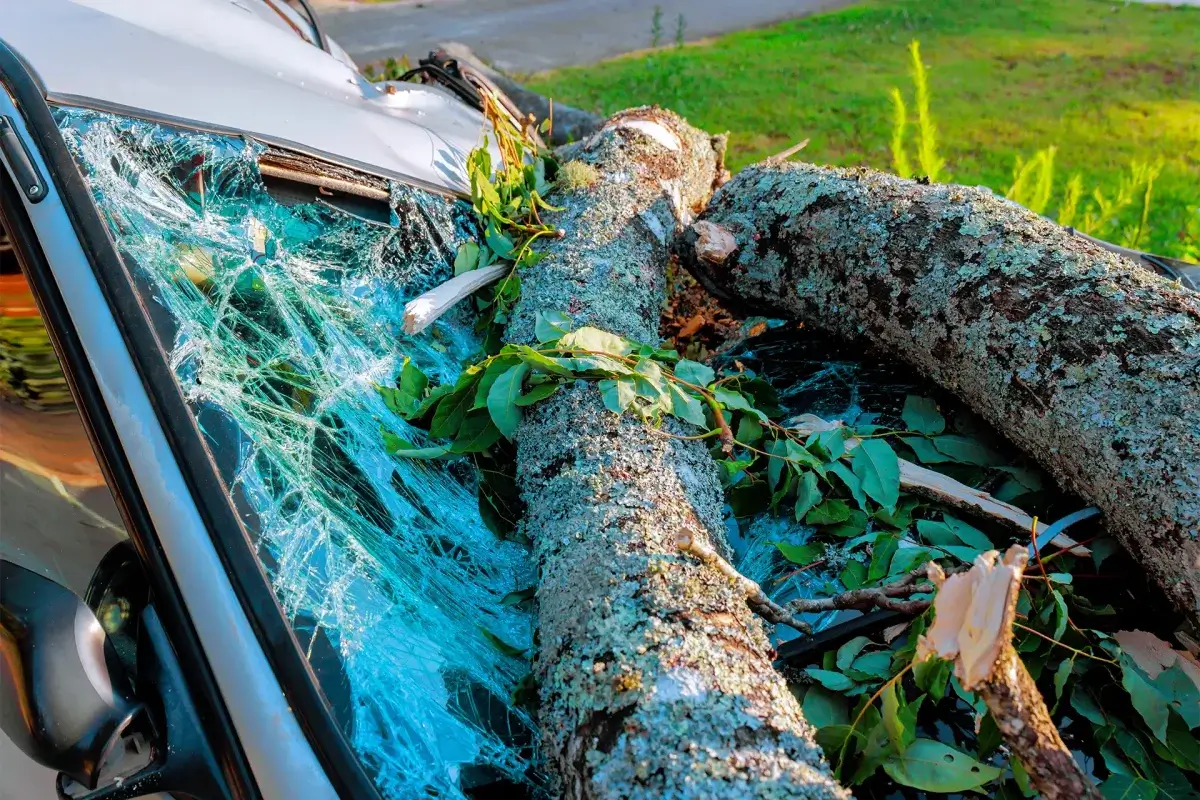
When a tree falls on your car during a storm, determining whether the vehicle is totaled depends on the extent of damage compared to its value. Understanding how insurance companies make this determination and your legal options helps you navigate this stressful situation effectively.
When Is a Car Considered Totaled After Tree Damage?
The Total Loss Threshold
Insurance companies declare a vehicle “totaled” when repair costs exceed a certain percentage of the car’s actual cash value (ACV). In New Jersey, most insurers use a threshold between 70-80%.
Example calculation:
- Your car’s ACV: $15,000
- Estimated repair costs: $12,000
- Percentage: 80%
- Result: Likely totaled
Factors Affecting the Total Loss Decision
Insurance adjusters consider:
- Actual cash value of your vehicle at time of damage
- Estimated repair costs from body shops
- Salvage value what the damaged car is worth
- Additional factors like parts availability and repair time
- Hidden damage that may be discovered during repairs
Types of Tree Damage That Often Total Cars
Significant structural damage typically leads to a total loss:
- Roof crushing from large tree impact
- Frame damage affecting vehicle safety
- Engine compartment intrusion
- Airbag deployment from impact sensors
- Shattered windshield combined with other damage
Insurance Coverage for Storm Tree Damage
Comprehensive Coverage
Comprehensive insurance, not liability coverage, pays for tree damage to your vehicle:
- Covers “acts of nature” including storms
- Subject to your deductible
- Pays actual cash value, not replacement cost
- Does not affect your rates in most cases (no-fault claim)
What If You Don’t Have Comprehensive Coverage?
Without comprehensive insurance, you have limited options:
- Pay for repairs out of pocket
- Pursue the property owner if negligence caused the tree fall
- File a claim if a government entity was responsible
Understanding Your Settlement Offer
If your car is totaled, the insurance company will offer a settlement based on:
- Comparable vehicle sales in your area
- Your car’s mileage and condition
- Features and options on your specific vehicle
- Recent market conditions
When You Can Sue for Storm Tree Damage
Challenging the “Act of God” Defense
Property owners often claim storm damage was an unavoidable “act of God.” However, liability may still exist when:
- The tree was already dead or dying before the storm
- The owner ignored visible signs of decay or disease
- Previous storms had damaged the tree
- Professionals had warned about the tree’s condition
- The tree was improperly maintained
Proving Property Owner Negligence
In a case handled by Gill & Chamas, a man received a $575,000 settlement after sustaining injuries when a fallen tree blocked a roadway. Evidence that the tree was hazardous before the storm proved critical.
To establish negligence:
- Document the tree’s condition after the fall
- Photograph signs of prior decay or damage
- Gather witness statements about the tree’s history
- Obtain maintenance records from the property owner
- Consult with arborists about tree condition
Municipal Liability
When trees on public property cause vehicle damage:
- The municipality may be liable if they knew about the hazard
- Tort claim notice must be filed within 90 days
- Government entities have limited immunity but exceptions exist
Steps to Take After a Tree Falls on Your Car
Immediate Actions
- Ensure safety first – Stay away from downed power lines
- Call 911 if anyone is injured – Get medical attention immediately
- Document the scene – Take extensive photos and videos
- Identify the tree’s origin – Determine whose property it came from
- Report to police – Get an official incident report
- Contact your insurance – Report the claim promptly
Documenting Your Claim
Thorough documentation strengthens both insurance and legal claims:
- Vehicle damage – Photograph from all angles
- Tree condition – Capture evidence of decay, rot, or prior damage
- Weather conditions – Note the severity of the storm
- Witness information – Get names and contact details
- Property ownership – Identify who owns the tree
Protecting Your Rights
- Don’t accept the first settlement offer without evaluation
- Keep all receipts for related expenses
- Document rental car costs and transportation needs
- Get multiple repair estimates if possible
- Consult an attorney if injuries occurred or liability is disputed
Injuries from Trees Falling on Cars
Common Injuries
When trees fall on occupied vehicles, injuries can be severe:
- Traumatic brain injuries from impact
- Spinal cord injuries
- Broken bones and crush injuries
- Lacerations from glass
- Psychological trauma
A Monmouth County case resulted in a $382,000 settlement when Gill & Chamas proved the tree was old and should have been maintained and removed for safety reasons.
Compensation Beyond Vehicle Damage
If you were injured, you may recover:
- Medical expenses (emergency care, surgery, rehabilitation)
- Lost wages during recovery
- Future medical treatment costs
- Pain and suffering
- Permanent disability damages
- Loss of quality of life
Dealing with Insurance Companies
Negotiating Your Total Loss Settlement
If your car is totaled and you believe the offer is too low:
- Research comparable vehicle values in your area
- Document any features or upgrades on your car
- Provide maintenance records showing good condition
- Request the insurance company’s valuation report
- Consider hiring an independent appraiser
Gap Insurance Considerations
If you owe more on your car loan than the insurance settlement:
- Gap insurance covers the difference
- Without it, you’re responsible for the remaining balance
- Some lease agreements include gap coverage
- Check your loan documents for coverage details
Diminished Value Claims
If your car is repaired rather than totaled, it may have diminished resale value:
- Some states allow diminished value claims
- Insurance companies often resist these claims
- Documentation of the damage helps support value reduction
- Consider the impact when deciding between repair and replacement
Rental Car and Transportation Costs
Coverage During Repairs or Replacement
If you have rental reimbursement coverage:
- Insurance pays for a rental car while yours is repaired
- Coverage limits vary (typically $30-50 per day, 30-day max)
- Ends when your car is fixed or total loss is settled
- Keep all rental receipts
Without Rental Coverage
You may still recover transportation costs if:
- Another party was negligent (their insurance pays)
- You prevail in a lawsuit against the property owner
- You negotiate transportation costs into your settlement
When to Hire an Attorney
Consider legal representation when:
- You suffered injuries in the accident
- The property owner denies responsibility
- Your insurance claim is denied or undervalued
- A government entity may be liable (90-day notice required)
- Multiple parties may share liability
Gill & Chamas investigates tree accident cases thoroughly, examining every aspect of the collision and uncovering all responsible parties. With offices in Woodbridge and Howell, the firm serves clients throughout Middlesex County, Monmouth County, and all of New Jersey.
Contact Gill & Chamas for a Free Consultation
Frequently Asked Questions
Does comprehensive insurance cover tree damage from storms?
Yes, comprehensive coverage typically pays for tree damage regardless of who owned the tree. You’ll pay your deductible, and the claim usually won’t raise your rates since it’s not an at-fault accident.
How does the insurance company determine if my car is totaled?
Insurance companies compare repair costs to your vehicle’s actual cash value. If repairs exceed roughly 70-80% of the car’s value, they’ll likely declare it a total loss and pay you the ACV minus your deductible.
Can I sue if a tree fell on my car during a storm?
You may have a lawsuit if the property owner knew or should have known the tree was hazardous. Storm damage alone doesn’t excuse liability if the tree was already compromised before the weather event.
What if I disagree with my car’s total loss value?
Research comparable vehicle sales, document your car’s condition and features, request the insurance company’s valuation report, and consider hiring an independent appraiser. You can negotiate the settlement amount.
How long do I have to file a claim after storm tree damage?
Report to your insurance immediately. If pursuing a lawsuit, personal injury claims generally must be filed within 2 years, property damage within 6 years, and claims against government entities require notice within 90 days.