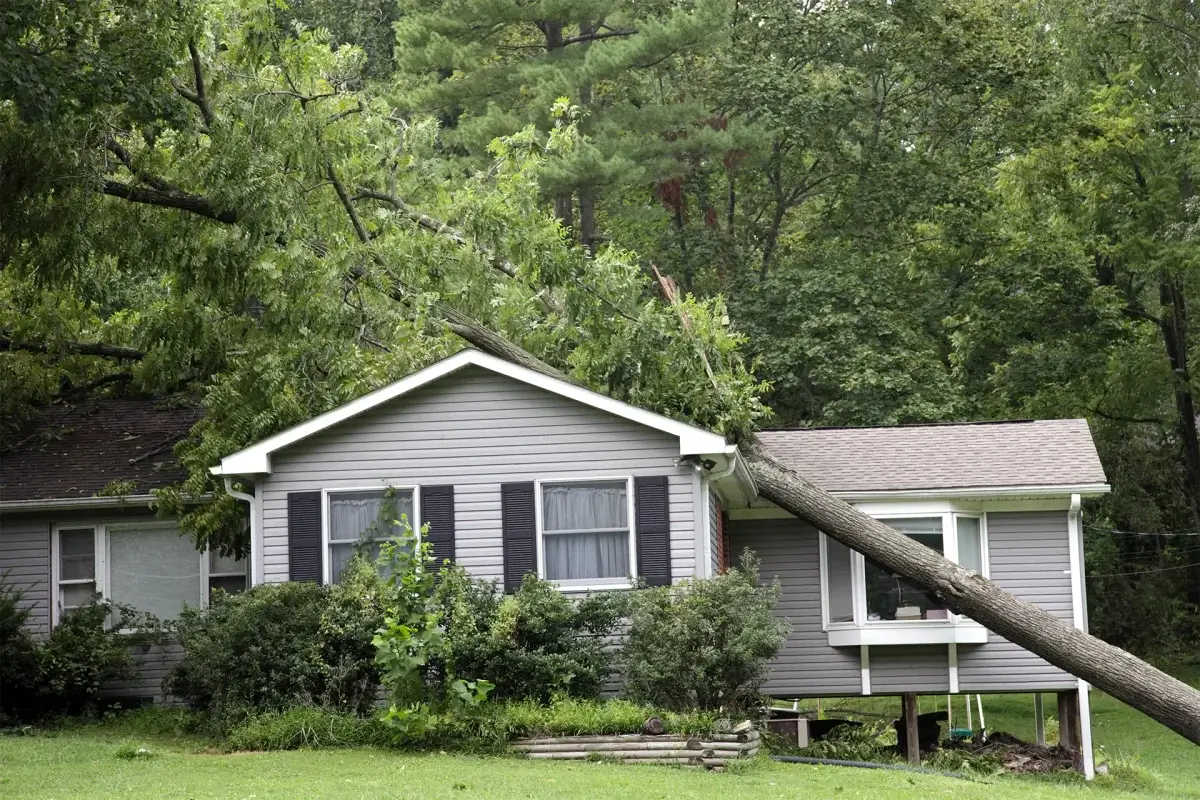
Homeowners insurance generally covers damage caused by fallen trees, but coverage specifics depend on what was damaged, what caused the tree to fall, and where the tree originated. Understanding your policy helps you navigate claims and protect your property investment.
What Homeowners Insurance Covers for Tree Damage
Damage to Your Home
Standard homeowners policies cover structural damage from fallen trees when caused by:
- Wind and storms
- Lightning strikes
- Weight of ice or snow
- Falling objects (including trees)
- Fire (spreading from lightning)
Covered under Dwelling Coverage (Coverage A):
- Roof damage from tree impact
- Siding and exterior damage
- Window and door destruction
- Structural frame damage
- Chimney and foundation repairs
Damage to Other Structures
Coverage B protects detached structures on your property:
- Detached garages
- Sheds and outbuildings
- Fences and gates
- Pools and pool houses
- Gazebos and pergolas
Personal Property Damage
Coverage C covers belongings damaged by fallen trees:
- Outdoor furniture
- Lawn equipment
- Vehicles in detached garages
- Items stored in sheds
- Sports and recreational equipment
Tree Removal Costs
Most policies include debris removal coverage:
- Removal of tree from structure
- Cleanup and disposal
- Typically limited ($500-1,000 per tree)
- Higher limits if tree blocks driveway or accessibility
What Homeowners Insurance Typically Doesn’t Cover
Healthy Trees That Fall
If a healthy tree falls and damages only your lawn or landscaping (not structures), insurance typically won’t pay for removal.
Gradual Damage
Damage occurring over time rather than from sudden events:
- Root damage to foundations
- Slow trunk growth damaging structures
- Branches gradually scraping siding
Maintenance Issues
Damage resulting from failure to maintain trees:
- Dead trees you knew needed removal
- Diseased trees you ignored
- Overgrown branches you neglected
Flood-Related Tree Damage
Standard homeowners policies exclude flood damage. Separate flood insurance is required for:
- Trees uprooted by flooding
- Debris carried by floodwaters
- Storm surge damage
Coverage When a Neighbor’s Tree Falls on Your Property
Filing with Your Own Insurance
In most cases, you file claims with your own homeowners insurance:
- Your policy covers damage to your property
- Regardless of where the tree originated
- Subject to your deductible
- Won’t affect rates for “act of nature” claims
When the Neighbor’s Insurance Applies
The neighbor’s liability coverage may pay when:
- The tree was visibly dead or diseased
- You warned them about the hazardous tree
- They ignored professional recommendations
- Prior incidents signaled danger
Gill & Chamas has recovered substantial settlements in tree damage cases. A $382,000 settlement was obtained when evidence showed the tree was old and should have been maintained and removed for safety reasons.
Pursuing the Negligent Neighbor
If your neighbor’s negligence caused tree damage, you may:
- File a claim against their homeowners liability coverage
- Recover your deductible and uncovered costs
- Seek compensation for injuries
- Pursue legal action if insurance is insufficient
Understanding Your Policy Limits
Common Coverage Limits
Review your policy for specific limits on:
| Coverage Type | Typical Limits |
|---|---|
| Dwelling (Coverage A) | Policy face value |
| Other Structures (B) | 10% of dwelling coverage |
| Personal Property (C) | 50-70% of dwelling coverage |
| Tree/Debris Removal | $500-1,000 per tree |
| Landscaping | Limited (often 5% of dwelling) |
Additional Coverage Options
Consider endorsements for:
- Increased debris removal – Higher removal limits
- Replacement cost coverage – Full replacement vs. depreciated value
- Landscaping coverage – Better protection for outdoor investments
- Umbrella liability – Protection if sued for your tree’s damage
Filing a Tree Damage Claim
Steps to Take Immediately
- Document all damage – Photograph before any cleanup
- Secure your property – Prevent additional damage
- Review your policy – Understand coverage and deductible
- Report promptly – Contact your insurer quickly
- Get repair estimates – Multiple quotes help negotiations
Working with Adjusters
When the insurance adjuster visits:
- Walk through all damage points
- Share your documentation
- Discuss temporary repairs needed
- Ask about advance payments for urgent repairs
- Request explanation of coverage decisions
Common Claim Disputes
Insurers may dispute claims based on:
- Pre-existing damage vs. new damage
- Maintenance neglect arguments
- Policy exclusions
- Coverage limit interpretations
- Depreciation calculations
When Insurance Isn’t Enough
Pursuing Additional Recovery
If your insurance doesn’t fully cover your losses:
- File claims against negligent property owners
- Pursue contractors for improper tree care
- Consider municipal liability for public trees
- Consult an attorney about legal options
Personal Injury Claims
When tree accidents cause injuries, insurance claims expand:
- Medical expenses coverage
- Lost wages compensation
- Pain and suffering damages
- Future care costs
A man received a $575,000 settlement after sustaining injuries when a fallen tree blocked a roadway. Serious tree accidents often require legal action beyond insurance claims.
Protecting Your Property and Coverage
Preventive Maintenance
Insurance companies favor proactive property owners:
- Schedule regular tree inspections
- Remove dead or hazardous trees
- Keep trees trimmed away from structures
- Document maintenance in writing
Policy Review Tips
Annually review your homeowners policy for:
- Adequate dwelling coverage for current values
- Appropriate deductible levels
- Sufficient liability protection
- Endorsements for specific concerns
Documenting Your Property
Create records that support future claims:
- Photograph trees and property regularly
- Keep receipts for tree care services
- Maintain arborist inspection reports
- Document valuable landscaping
Special Situations
Rental Properties
If you rent:
- Landlord’s insurance covers the structure
- Renters insurance covers your belongings
- Report tree damage to landlord immediately
- Document your personal property losses
Condo Associations
Tree damage in condo communities:
- Association master policy covers common areas
- Your HO-6 policy covers unit interiors
- Review association bylaws for responsibility
- Coordinate claims with association management
Historic or Valuable Trees
Losing mature, valuable trees:
- Standard policies offer limited tree replacement
- Special endorsements may provide higher coverage
- Consider appraising significant trees
- Document species and age for claims
Consult an Attorney When Needed
Legal help is advisable when:
- Insurance denies or undervalues your claim
- A negligent party caused the tree to fall
- You suffered injuries from the tree accident
- Municipal property is involved (90-day notice required)
- Multiple parties may share liability
Gill & Chamas handles tree accident and property damage claims throughout New Jersey. With offices in Woodbridge and Howell, the firm serves clients in Middlesex and Monmouth counties.
Contact Gill & Chamas for a Free Consultation
Frequently Asked Questions
Does homeowners insurance cover tree removal if the tree didn’t hit anything?
Generally no. If a tree falls and damages only your lawn without hitting structures, most policies won’t pay for removal. Coverage typically applies when trees damage covered property.
Will my rates increase if I file a tree damage claim?
Claims from natural disasters like storms typically don’t increase rates since they’re not your fault. However, patterns of claims or maintenance-related issues may affect premiums.
Does my insurance cover a neighbor’s tree that fell on my property?
Yes, your homeowners insurance covers damage to your property regardless of where the tree originated. You may also pursue the neighbor’s liability insurance if they were negligent.
How much does homeowners insurance pay for tree removal?
Most policies limit tree removal to $500-1,000 per tree, with a total cap on debris removal. Higher limits may be available through endorsements.
What if insurance won’t pay enough for repairs?
You can negotiate with adjusters, hire a public adjuster, or consult an attorney. If a negligent party caused the damage, legal action may recover additional compensation.